
Compressed air is often referred to as the fourth utility, working quietly alongside electricity, water, and natural gas to keep production moving. Like any utility, its reliability depends on proper management at the system level. One of the most common challenges facilities face is moisture. Water vapor is an unavoidable byproduct of air compression, and when it is not properly controlled, it can undermine reliability, efficiency, and long-term operating cost. This article walks through how moisture behaves in compressed air systems, and how the choice of dryer (refrigerated or desiccant) fits into a broader air system strategy. The goal is not to prescribe a one-size-fits-all solution, but to provide the practical framework needed, with the heart of a teacher, to make an informed decision based on how your facility actually operates.
Why Moisture Control Matters in Compressed Air Systems
Moisture inside a compressed air system sets off a chain reaction that affects far more than air quality alone. Understanding how water forms and moves through the system helps explain why dryer selection is a system-level decision, not simply a component choice.
How Moisture Forms in Compressed Air
Atmospheric air naturally contains water vapor. When that air is compressed, its temperature rises, allowing it to hold more moisture in vapor form. As the compressed air cools in aftercoolers, piping, receivers, and downstream equipment, its capacity to retain moisture drops. Water vapor condenses into liquid on reaching the pressure dew point.
This condensation does not occur in one location. It forms throughout the system, settling in piping, receivers, filters, and end-use equipment. Without proper drying and separation, liquid water continues to migrate downstream, creating persistent reliability issues.
The Impact of Uncontrolled Moisture
Left unmanaged, moisture contributes to internal corrosion, valve and actuator failure, rusted tools, and contaminated processes. In colder environments, it can freeze and restrict airflow. In production settings, it can damage products, create scrap, or disrupt sensitive operations.
Over time, these effects show up as increased maintenance, unplanned downtime, shortened equipment life, and higher total cost of ownership. Moisture control is not about perfection, it is about reducing risk and stabilizing the compressed air utility so it supports production instead of undermining it.
The Role of an Air Dryer Compressed Air Systems
An air dryer is designed to control how much moisture remains in the compressed air by lowering its pressure dew point. By doing so, dryers prevent liquid water from forming downstream and protect both equipment and processes.
From a system perspective, dryers help preserve pneumatic efficiency, support consistent throughput, and align air quality with ISO 8573 requirements when applicable. Refrigerated and desiccant dryers approach this goal differently, and each serves a distinct role depending on environmental conditions, process sensitivity, and system design.
Refrigerated Air Dryers: Practical, Efficient Moisture Control
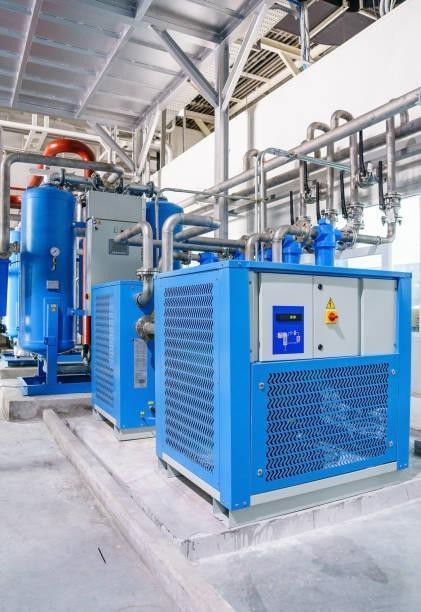
A refrigerated air dryer removes moisture by cooling compressed air through a refrigeration circuit. As the air temperature drops, water vapor condenses into liquid and is separated and discharged through an automatic drain. The dried air is then reheated slightly to reduce the risk of downstream condensation.
Most refrigerated dryers deliver a pressure dew point between 38°F and 50°F. As long as system temperatures remain above this range, liquid water will not form in the air lines. For this reason, refrigerated dryers are commonly used in indoor manufacturing environments and general plant air applications.
They are not ideal for freezing conditions or processes that require extremely low dew points, but within their operating range, they offer a dependable and energy-efficient solution.
Types of Refrigerated Dryers
- Cycling dryers adjust refrigeration output based on load, reducing energy consumption during periods of lower demand.
- Non-cycling dryers operate continuously and are often selected for steady, high-load applications where consistent performance is required.
Advantages and Limitations
Refrigerated dryers are generally cost-effective, energy-efficient, and straightforward to maintain. Because they do not rely on consumable desiccant media, ongoing maintenance is typically minimal. Their primary limitation is dew point capability. When air systems are subject to freezing temperatures or moisture-sensitive processes, additional drying becomes necessary.
Desiccant Air Dryers: When Ultra-Dry Air Is Required
Desiccant air dryers remove moisture through adsorption rather than cooling. Compressed air flows through a bed of desiccant material that attracts and holds water vapor on its surface. This process produces significantly drier air than refrigerated systems.
Most desiccant dryers operate using a twin-tower configuration. One vessel dries the air while the second regenerates by removing accumulated moisture from the desiccant. This alternating cycle allows continuous operation and enables pressure dew points of -40°F or lower.
Desiccant dryers are common in pharmaceutical manufacturing, electronics, paint systems, outdoor installations, and any application where freezing or moisture sensitivity creates unacceptable risk.
The trade-off is higher complexity. Desiccant systems typically involve greater capital cost, increased maintenance requirements, and additional energy consumption associated with regeneration, whether through purge air or electrical heating.
Refrigerated vs. Desiccant: Understanding the Trade-Offs
Refrigerated dryers rely on cooling to manage moisture and are well-suited for most general-purpose applications in controlled environments. Desiccant dryers remove water vapor to much lower dew points and maintain performance across a wide range of conditions, including freezing temperatures.
From a system perspective, the choice comes down to required dew point, environmental exposure, process sensitivity, and total cost of ownership. Selecting the wrong technology often leads to ongoing reliability issues or unnecessary operating expense.
Compressed Air Dryer Sizing and Selection Considerations
Proper dryer selection starts with understanding actual system airflow, pressure, and operating conditions. The dryer must be capable of handling peak demand without creating excessive pressure drop or compromising dew point performance.
The required pressure dew point should be determined by the lowest ambient temperature the compressed air piping will experience. For refrigerated dryers, inlet air temperature and
ambient conditions directly affect performance. For desiccant dryers, regeneration energy costs must be evaluated, balancing purge air loss against electrical consumption based on utility rates and system design.
Integrating Dryers into the Overall System
Dryer performance depends heavily on proper system integration. Dryers are typically installed downstream of air receivers to stabilize flow and upstream of point-of-use filtration. Coalescing pre-filters protect dryer internals from oil aerosols and particulates, while properly designed automatic drains prevent liquid carryover.
Pipe sizing should aim to minimize pressure drop, and dryers should be in well-ventilated areas to maintain rated performance. Many modern systems incorporate dew point monitoring and control strategies that allow facilities to detect issues early and maintain consistent air quality over time.

Choosing the Right Dryer for Your Facility
For many indoor manufacturing operations, refrigerated dryers provide reliable moisture control at the lowest operating cost. Facilities exposed to freezing conditions or operating moisture-sensitive processes often benefit from desiccant systems.
Because operating conditions vary widely, working with an experienced compressed air partner helps ensure the system is evaluated as a whole, not as isolated components.
CAST’s Approach to Air Drying Solutions
As an advocate in your corner, Compressed Air Solutions of Texas approaches air drying as part of a larger system strategy. CAST provides both refrigerated and desiccant dryer solutions designed to support long-term reliability, efficiency, and productivity.
Our end-to-end approach includes system evaluation, proper equipment selection, professional installation, preventive maintenance programs, and 24/7 support. We move beyond individual components to help facilities manage compressed air as a true fourth utility, optimizing performance while minimizing total cost of ownership.
By partnering with CAST, you gain more than a service provider. You gain a long-term partner focused on protecting uptime, extending equipment life, and supporting your operation with dependable, well-managed compressed air. Reach out today with any of your compressed air needs, or you can request a complimentary visit from one of our team members by calling or texting 346-388-4198.