

Compressed air is often referred to as the “fourth utility”, ranking alongside electricity, gas, and water in industrial importance. Compressed air systems are the backbone of countless operations, from powering pneumatic tools to driving entire automated production lines. These systems harness fundamental thermodynamic principles to transform ambient air into a potent energy source by mechanically compressing it, increasing its pressure, and then storing it for controlled release. This article explains the essential components, benefits, and industry applications of a compressed air system, highlighting how CAST delivers tailored, efficient solutions that ensure performance, reliability, and compliance across a range of demanding sectors.
What Is a Compressed Air System?
A compressed air system is a sophisticated network of components designed to generate, treat, store, and deliver pressurized air as a reliable power source for industrial, commercial, and even medical applications. At its heart, the system takes ordinary atmospheric air and, through mechanical compression, concentrates its energy potential, creating an on-demand power medium that is cleaner than electricity and safer than hydraulic alternatives. These systems excel in three core functionalities:
-
- Power Conversion: Transforming electrical energy into highly controllable kinetic energy.
-
- Process Support: Providing clean, dry air for sensitive manufacturing environments.
-
- Force Generation: Delivering consistent torque for tools and machinery.
The true indispensable feature of a compressed air system is its starring role in modern automation, where it drives pneumatic actuators with precision timing, powers production line robots without risk of spark, as well as enables delicate material handling through vacuum systems.
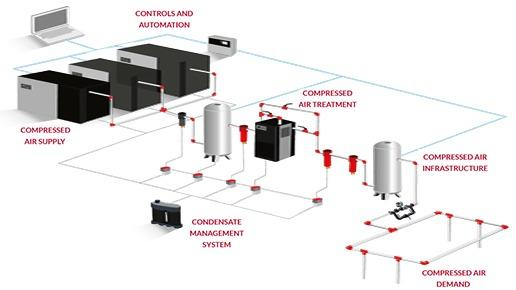
Key Components of a Compressed Air System
Air Compressor
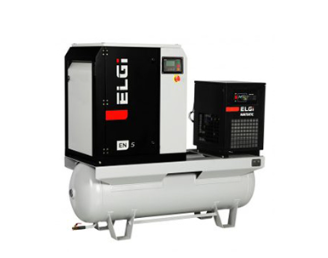
The heart of the system, this machine converts mechanical energy into pressurized air by reducing atmospheric air volume. Available in piston, rotary screw, and centrifugal designs, compressors determine the system’s capacity and efficiency. Industrial-grade units feature multi-stage compression for higher pressures, while oil-free variants maintain air purity for sensitive applications, such as pharmaceuticals.
Air Receiver Tank
Acting as a pressurized storage reservoir, this vessel stabilizes airflow by absorbing pulsations from the compressor and providing buffer capacity during peak demand. Properly sized tanks prevent short-cycling and allow moisture to condense before reaching downstream equipment.
Air Dryer
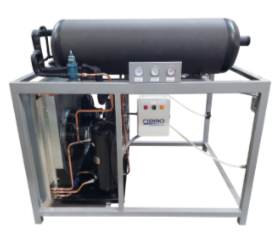
Critical for moisture control, these systems, such as refrigerant, desiccant, or membrane-type, reduce dew points to prevent liquid water formation. Industrial desiccant dryers can achieve -40°F dew points for instrument air, while refrigerant dryers suffice for general plant air at +38°F.
Control System
Modern setups use programmable logic controllers (PLCs) with pressure transducers and VFD drives to optimize compressor modulation. Advanced systems incorporate IoT sensors for predictive maintenance, tracking parameters such as specific power consumption in real-time.
Filtration System
Multi-stage filtration removes particles, oil aerosols (coalescing filters), and vapours (activated carbon) to protect downstream equipment. High-efficiency particulate air (HEPA) filters are mandatory for food-grade and medical applications.
Distribution Piping
Proper-sized piping like aluminium, stainless steel, or engineered plastics minimizes pressure drops (ideally <10 psi across the system). Loop-style layouts with downward-sloping mains prevent moisture accumulation, while quick-disconnect fittings enable flexible tool connections.
Benefits of a Well-Designed Compressed Air System
A properly engineered compressed air system delivers transformative advantages that extend far beyond basic pneumatic operation, thus becoming a strategic asset for any industrial or commercial operation.
Energy Efficiency
A well-designed compressed air system dramatically reduces energy consumption through precision engineering. For example, Variable Speed Drive (VSD) compressors match output to real-time demand, avoiding the 20-30% energy waste associated with fixed-speed units. Heat recovery system captures 70-90% of thermal byproduct for facility heating, turning waste into value. Without these features, operations face inflated electricity bills and unnecessary carbon emissions. This is because oversized compressors constantly cycle between loaded and unloaded states, wasting power and increasing wear.
Consistent Pressure Reliability
Properly engineered systems maintain tight pressure tolerance through balanced compressor staging, adequately sized receivers, and optimized piping layouts. This stability is crucial for sensitive applications such as robotic assembly lines or spray painting, where fluctuation causes defects or stoppages. Systems lacking these controls (system controls) suffer from disruptive pressure drops during peak usage or dangerous over-pressurization that stresses equipment.
Reduced Maintenance Demands
Automated features like self-draining moisture traps, centralized filtration, and predictive monitoring sensors cut maintenance labour by 40% compared to manual systems. Smart controllers alert technicians to issues before failures occur. Neglected system demands constant attention – manual draining waste hours weekly, while ignored filter changes lead to catastrophic compressor failures.
Operational Scalability of a Compressed Air System
Modular designs allow seamless expansion through additional compressors or extended piping without complete system overhauls. This future-proofing is essential for growing manufacturers who need to incrementally increase capacity. Inflexible systems create bottlenecks that force expensive, premature replacements when production needs change.
Moisture Contamination Control in a Compressed Air System
Industrial air dryers (refrigerant or desiccant) coupled with multi-stage filtration (particulate, coalescing, and vapor), ensure air purity meets stringent ISO 8573-1 standards. This protection is vital for industries such as pharmaceuticals or food processing, where moisture causes product spoilage or microbial growth. Neglecting air treatment leads to frozen valves, corroded pipelines, and contaminated end products that require expensive rework.
Industry Applications
Manufacturing and Automation
Compressed air systems serve as the lifeblood of modern manufacturing, powering pneumatic robots, assembly line actuators, and CNC machine tools with precise, repeatable force. In automotive plants, they drive impact wrenches for wheel assembly and operate painting and welding robots that require oil-free air for flawless finishes.
Pharmaceutical and Medical
Hospital air systems require sterile, medical-grade compressed air for ventilators, surgical tools, and during the manufacturing of drugs. Particle filters remove contaminants, while desiccant dryers achieve -40°F dew points to prevent moisture-related spoilage.
Power Generation
Power plants rely on compressed air for turbine start-up sequences, soot blowing in boilers, and control systems.
Transportation (Rail and Aerospace)
The train braking system depends on reliable compressed air, with multiple redundant compressors to ensure safety. Aircraft use pneumatic systems for landing gear operation, door controls, and engine starts. These applications demand lightweight, high-pressure compressors that can operate reliably across extreme temperature ranges.
Oil and Gas Compressed Air System
Offshore platforms utilize marine-grade compressed air systems for instrumentation, valve actuation, and pneumatic controls in hazardous areas where electricity poses a risk of ignition.
CAST’s Customized Solutions
Navigating the complexities of compressed air systems demands more than just equipment; it requires tailored expertise and reliable support. Compressed Air Solutions of Texas delivers exactly that, with complete compressed air system design and installation service customized to your facility, budget, and application. Our solutions integrate performance, efficiency, and long-term reliability, supported by 24/7 technical assistance, preventive maintenance programs, and advanced system optimization to keep your operations running at peak performance. With a team of seasoned professionals and local expertise rooted in Greater Houston and Brazos Valley, CAST ensures fast response times and a deep understanding of regulatory compliance, giving you the confidence to focus on what matters most: your productivity. Contact us today for more information.